Welcome to DU!
The truly grassroots left-of-center political community where regular people, not algorithms, drive the discussions and set the standards.
Join the community:
Create a free account
Support DU (and get rid of ads!):
Become a Star Member
Latest Breaking News
Editorials & Other Articles
General Discussion
The DU Lounge
All Forums
Issue Forums
Culture Forums
Alliance Forums
Region Forums
Support Forums
Help & Search
Environment & Energy
Showing Original Post only (View all)
Some Rather Disturbing Graphics on Persistent Chemical Pollution of European Soils. [View all]
I will rather briefly discuss this paper, Identification and Spatial Analysis of Co-Occurring Pollution Sources of HCHs, PCBs, and PFASs in the EU and Potential Risks of Soil Pollution, Naila Hina, Juliane Glüge, and Martin Scheringer, Environmental Science & Technology 2026 60 (22), 16158-16167, with emphasis on the disturbing graphics.
The paper is free to the public to read. Nonetheless, for convenience, the introduction with definitions.
1. Introduction
Persistent organic pollutants (POPs) are commonly referred to as “poisons without passports”. (1) They are a group of organic chemicals that are hazardous due to their resistance to environmental degradation, transboundary movement, significant harmful effects on human and environmental health, and bioaccumulation, which might result in biomagnification-induced death in top-ranked biota. (1) International restrictions, such as those imposed by the Stockholm Convention, aim to limit the production and use of POPs. However, despite these regulations, many soils remain contaminated owing to historical usage and ongoing production of POPs as byproducts of industrial processes, waste disposal, and agricultural activities. (2) Although restrictions have been implemented, they have not been effective in mitigating soil contamination in the long term.
Hexachlorocyclohexanes (HCHs), polychlorinated biphenyls (PCBs), and per- and polyfluoroalkyl substances (PFASs) are all relevant as toxic and persistent chemicals under international frameworks. γ-HCH and PCBs were among the initial 12 POPs in the Stockholm Convention, reflecting their common properties of persistence, bioaccumulation, and adverse effects on human and environmental health. (3) Many PFASs also pose adverse effects on human health, and many exhibit mobility from soil and cause groundwater contamination long after initial soil deposition. Similarly, HCH production at numerous sites produced millions of tonnes of waste and unintentional byproducts of lindane manufacture (mostly α- and β-HCH) dumped on landfills. Further, HCH spreads beyond its point of origin during landfill operations through volatilization and dust dispersal to adjacent soils. (4−6) This means that, even with reduced current usage, legacy contamination of these pollutants remains a concern.
PCBs are a class of POPs and were among the initial pollutants listed by the Stockholm Convention. Due to their widespread use in industrial applications such as electrical equipment, paints, plastics, rubber, PVC coatings, and hydraulic systems, PCBs have become pervasive in various environmental matrices, including soil. They are commonly found in high concentrations (range from 260 ng g-1 to 6.722 × 10⁶ ng g-1) in industrial zones, (7) primarily due to the use of their commercial products. Additionally, informal electronic waste recycling, (8) historical accidental events, such as damage to capacitors, and waste from electrical equipment such as transformers (9) remain major sources of soil pollution. Once PCBs are present in the soil, their mobility is influenced by organic matter content, soil properties, and tillage practices, with higher chlorinated congeners persisting longer in soils rich in organic matter. (10,11) Therefore, contaminated soils act as reservoirs of PCBs and facilitate their transfer to plants and food chains.
HCHs are a mix of several isomers with the γ-isomer, lindane, acting as an insecticide, and they form another group of pollutants causing widespread soil contamination. The primary sources of HCHs are industrial activities, including HCH production, processing, accidental spills or leakage from storage facilities, improper waste management, and agricultural use. (6,12,13) A huge amount of HCH waste has been produced and dumped across sites in the EU, resulting in soil contamination at these locations, such as 4000 tonnes of HCH waste in the Netherlands that contaminated 200,000 tonnes of soil, and 82,000 tonnes of dumped HCH isomers that caused between 500,000 and 1 million tonnes of contaminated soil in Spain. (14)
PFASs are a group of persistent synthetic chemicals that have also become a significant environmental concern due to their extreme persistence and health risks. PFASs are used in many different applications and in many consumer products. In total, over 200 use categories and subcategories have been identified for more than 1400 individual PFASs. (15) Due to their diverse uses, the sources of PFAS soil pollution are also diverse. The most elevated levels of PFASs in soil were found at sites exposed to aqueous film-forming foam (AFFF), PFAS production facilities, and biosolids. (16) The highest concentrations of PFASs in soil, ranging from 211 ng g-1 to 3.57 × 10⁵ ng g-1 dry weight, were found in samples collected from fire training locations. (17−19) PFAS contamination in soil poses a persistent challenge for environmental quality and public health. PFAS contamination in soil can cause exposure of humans to PFASs via contaminated drinking water or by eating contaminated meat or fish.to 6.722 × 10⁶] ng g–1) in industrial zones, (7) primarily due to the use of their commercial products. Additionally, informal electronic waste recycling, (8) historical accidental events, such as damage to capacitors, and waste from electrical equipment such as transformers (9) remain major sources of soil pollution. Once PCBs are present in the soil, their mobility is influenced by organic matter content, soil properties, and tillage practices, with higher chlorinated congeners persisting longer in soils rich in organic matter. (10,11) Therefore, contaminated soils act as reservoirs of PCBs and facilitate their transfer to plants and food chains.
HCHs are a mix of several isomers with the γ-isomer, lindane, acting as an insecticide, and they form another group of pollutants causing widespread soil contamination. The primary sources of HCHs are industrial activities, including HCH production, processing, accidental spills or leakage from storage facilities, improper waste management, and agricultural use. (6,12,13) A huge amount of HCH waste has been produced and dumped across sites in the EU, resulting in soil contamination at these locations, such as 4000 tonnes of HCH waste in the Netherlands that contaminated 200,000 tonnes of soil, and 82,000 tonnes of dumped HCH isomers that caused between 500,000 and 1 million tonnes of contaminated soil in Spain. (14)
PFASs are a group of persistent synthetic chemicals that have also become a significant environmental concern due to their extreme persistence and health risks. PFASs are used in many different applications and in many consumer products. In total, over 200 use categories and subcategories have been identified for more than 1400 individual PFASs. (15) Due to their diverse uses, the sources of PFAS soil pollution are also diverse. The most elevated levels of PFASs in soil were found at sites exposed to aqueous film-forming foam (AFFF), PFAS production facilities, and biosolids. (16) The highest concentrations of PFASs in soil, ranging from 211 ng g-1 to 3.57 × 10⁵ ng g-1 dry weight, were found in samples collected from fire training locations. (17−19) PFAS contamination in soil poses a persistent challenge for environmental quality and public health. PFAS contamination in soil can cause exposure of humans to PFASs via contaminated drinking water or by eating contaminated meat or fish...
Persistent organic pollutants (POPs) are commonly referred to as “poisons without passports”. (1) They are a group of organic chemicals that are hazardous due to their resistance to environmental degradation, transboundary movement, significant harmful effects on human and environmental health, and bioaccumulation, which might result in biomagnification-induced death in top-ranked biota. (1) International restrictions, such as those imposed by the Stockholm Convention, aim to limit the production and use of POPs. However, despite these regulations, many soils remain contaminated owing to historical usage and ongoing production of POPs as byproducts of industrial processes, waste disposal, and agricultural activities. (2) Although restrictions have been implemented, they have not been effective in mitigating soil contamination in the long term.
Hexachlorocyclohexanes (HCHs), polychlorinated biphenyls (PCBs), and per- and polyfluoroalkyl substances (PFASs) are all relevant as toxic and persistent chemicals under international frameworks. γ-HCH and PCBs were among the initial 12 POPs in the Stockholm Convention, reflecting their common properties of persistence, bioaccumulation, and adverse effects on human and environmental health. (3) Many PFASs also pose adverse effects on human health, and many exhibit mobility from soil and cause groundwater contamination long after initial soil deposition. Similarly, HCH production at numerous sites produced millions of tonnes of waste and unintentional byproducts of lindane manufacture (mostly α- and β-HCH) dumped on landfills. Further, HCH spreads beyond its point of origin during landfill operations through volatilization and dust dispersal to adjacent soils. (4−6) This means that, even with reduced current usage, legacy contamination of these pollutants remains a concern.
PCBs are a class of POPs and were among the initial pollutants listed by the Stockholm Convention. Due to their widespread use in industrial applications such as electrical equipment, paints, plastics, rubber, PVC coatings, and hydraulic systems, PCBs have become pervasive in various environmental matrices, including soil. They are commonly found in high concentrations (range from 260 ng g-1 to 6.722 × 10⁶ ng g-1) in industrial zones, (7) primarily due to the use of their commercial products. Additionally, informal electronic waste recycling, (8) historical accidental events, such as damage to capacitors, and waste from electrical equipment such as transformers (9) remain major sources of soil pollution. Once PCBs are present in the soil, their mobility is influenced by organic matter content, soil properties, and tillage practices, with higher chlorinated congeners persisting longer in soils rich in organic matter. (10,11) Therefore, contaminated soils act as reservoirs of PCBs and facilitate their transfer to plants and food chains.
HCHs are a mix of several isomers with the γ-isomer, lindane, acting as an insecticide, and they form another group of pollutants causing widespread soil contamination. The primary sources of HCHs are industrial activities, including HCH production, processing, accidental spills or leakage from storage facilities, improper waste management, and agricultural use. (6,12,13) A huge amount of HCH waste has been produced and dumped across sites in the EU, resulting in soil contamination at these locations, such as 4000 tonnes of HCH waste in the Netherlands that contaminated 200,000 tonnes of soil, and 82,000 tonnes of dumped HCH isomers that caused between 500,000 and 1 million tonnes of contaminated soil in Spain. (14)
PFASs are a group of persistent synthetic chemicals that have also become a significant environmental concern due to their extreme persistence and health risks. PFASs are used in many different applications and in many consumer products. In total, over 200 use categories and subcategories have been identified for more than 1400 individual PFASs. (15) Due to their diverse uses, the sources of PFAS soil pollution are also diverse. The most elevated levels of PFASs in soil were found at sites exposed to aqueous film-forming foam (AFFF), PFAS production facilities, and biosolids. (16) The highest concentrations of PFASs in soil, ranging from 211 ng g-1 to 3.57 × 10⁵ ng g-1 dry weight, were found in samples collected from fire training locations. (17−19) PFAS contamination in soil poses a persistent challenge for environmental quality and public health. PFAS contamination in soil can cause exposure of humans to PFASs via contaminated drinking water or by eating contaminated meat or fish.to 6.722 × 10⁶] ng g–1) in industrial zones, (7) primarily due to the use of their commercial products. Additionally, informal electronic waste recycling, (8) historical accidental events, such as damage to capacitors, and waste from electrical equipment such as transformers (9) remain major sources of soil pollution. Once PCBs are present in the soil, their mobility is influenced by organic matter content, soil properties, and tillage practices, with higher chlorinated congeners persisting longer in soils rich in organic matter. (10,11) Therefore, contaminated soils act as reservoirs of PCBs and facilitate their transfer to plants and food chains.
HCHs are a mix of several isomers with the γ-isomer, lindane, acting as an insecticide, and they form another group of pollutants causing widespread soil contamination. The primary sources of HCHs are industrial activities, including HCH production, processing, accidental spills or leakage from storage facilities, improper waste management, and agricultural use. (6,12,13) A huge amount of HCH waste has been produced and dumped across sites in the EU, resulting in soil contamination at these locations, such as 4000 tonnes of HCH waste in the Netherlands that contaminated 200,000 tonnes of soil, and 82,000 tonnes of dumped HCH isomers that caused between 500,000 and 1 million tonnes of contaminated soil in Spain. (14)
PFASs are a group of persistent synthetic chemicals that have also become a significant environmental concern due to their extreme persistence and health risks. PFASs are used in many different applications and in many consumer products. In total, over 200 use categories and subcategories have been identified for more than 1400 individual PFASs. (15) Due to their diverse uses, the sources of PFAS soil pollution are also diverse. The most elevated levels of PFASs in soil were found at sites exposed to aqueous film-forming foam (AFFF), PFAS production facilities, and biosolids. (16) The highest concentrations of PFASs in soil, ranging from 211 ng g-1 to 3.57 × 10⁵ ng g-1 dry weight, were found in samples collected from fire training locations. (17−19) PFAS contamination in soil poses a persistent challenge for environmental quality and public health. PFAS contamination in soil can cause exposure of humans to PFASs via contaminated drinking water or by eating contaminated meat or fish...
Graphics:
The caption:
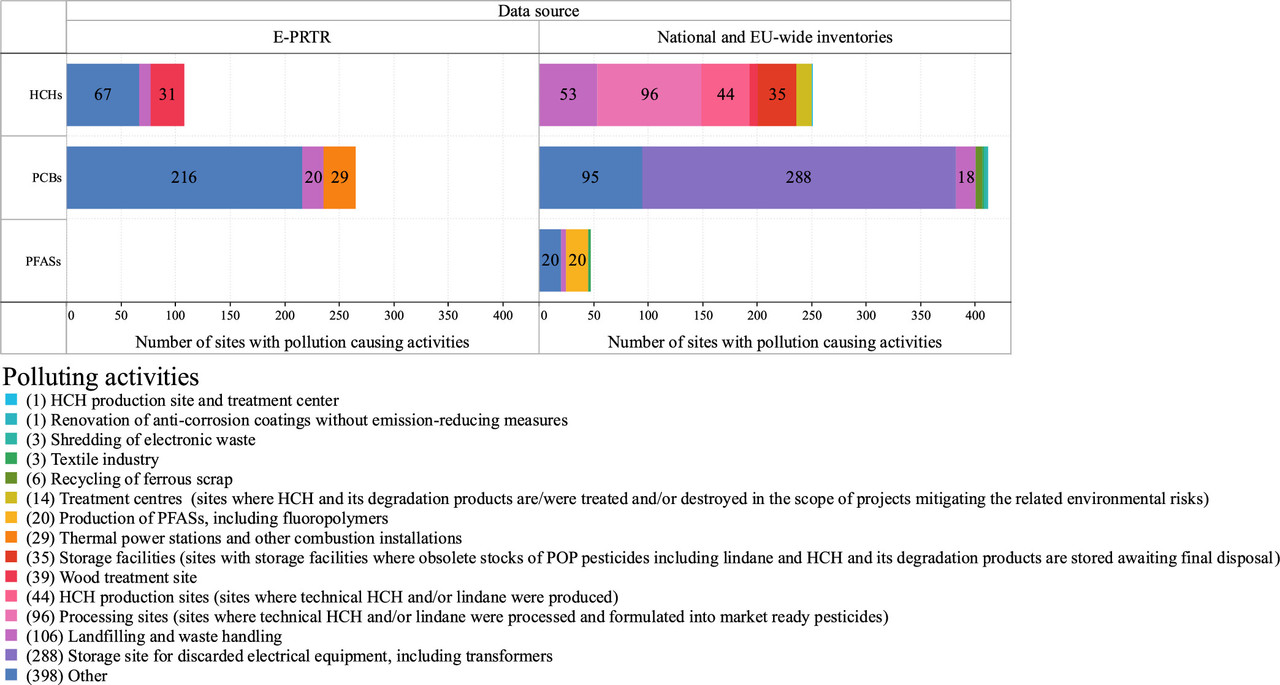
Figure 1. Data sources (E-PRTR and national and EU-wide repositories), and the number of potentially contaminated sites due to the presence of pollution activities from each source for PCBs, HCHs, and PFASs. The numbers in the legend in brackets indicate the number of sites.
The caption:
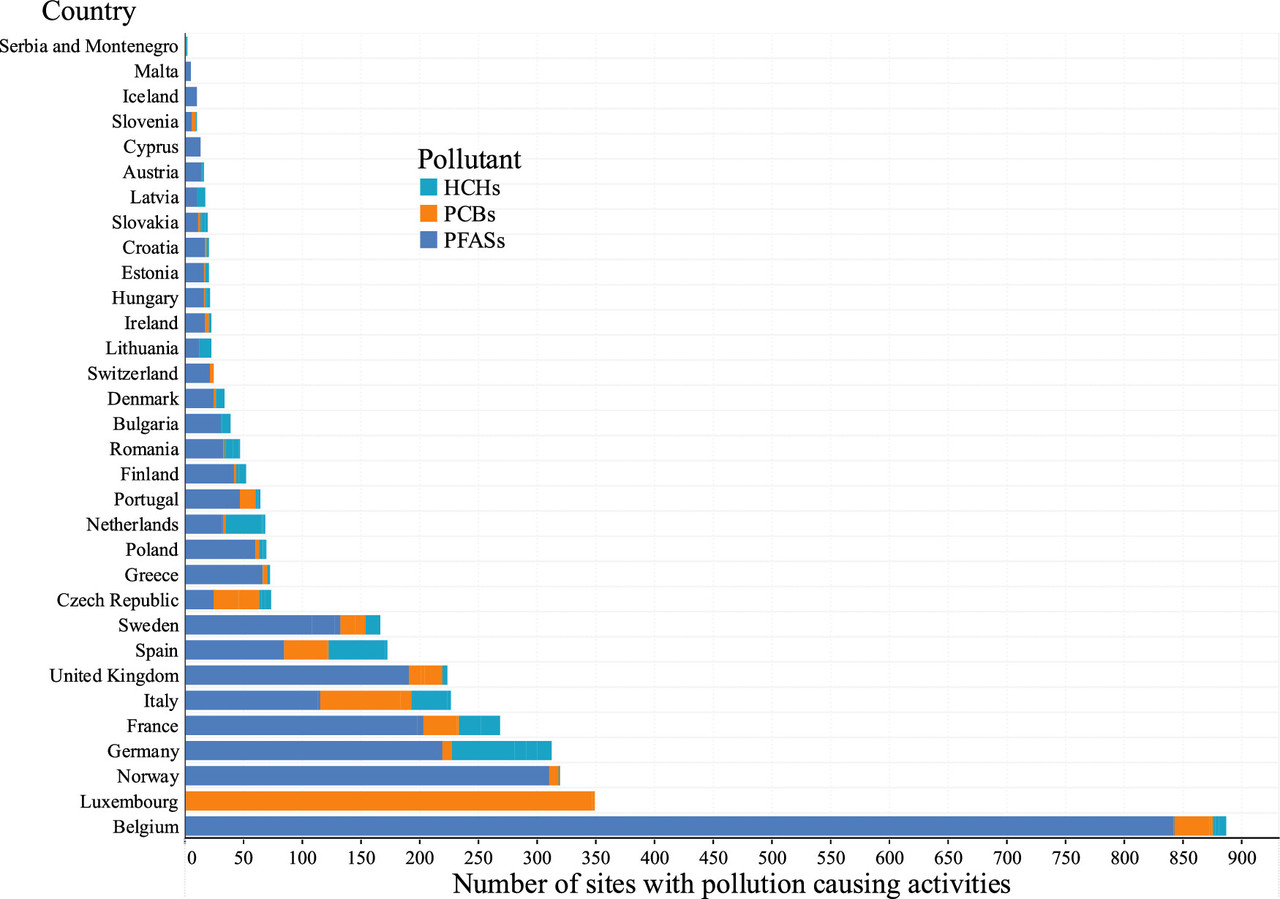
Figure 2. List of the countries and number of sites with identified pollution-causing activities for PCBs, HCHs, and PFASs from all of the data sources included in this study.
The caption:
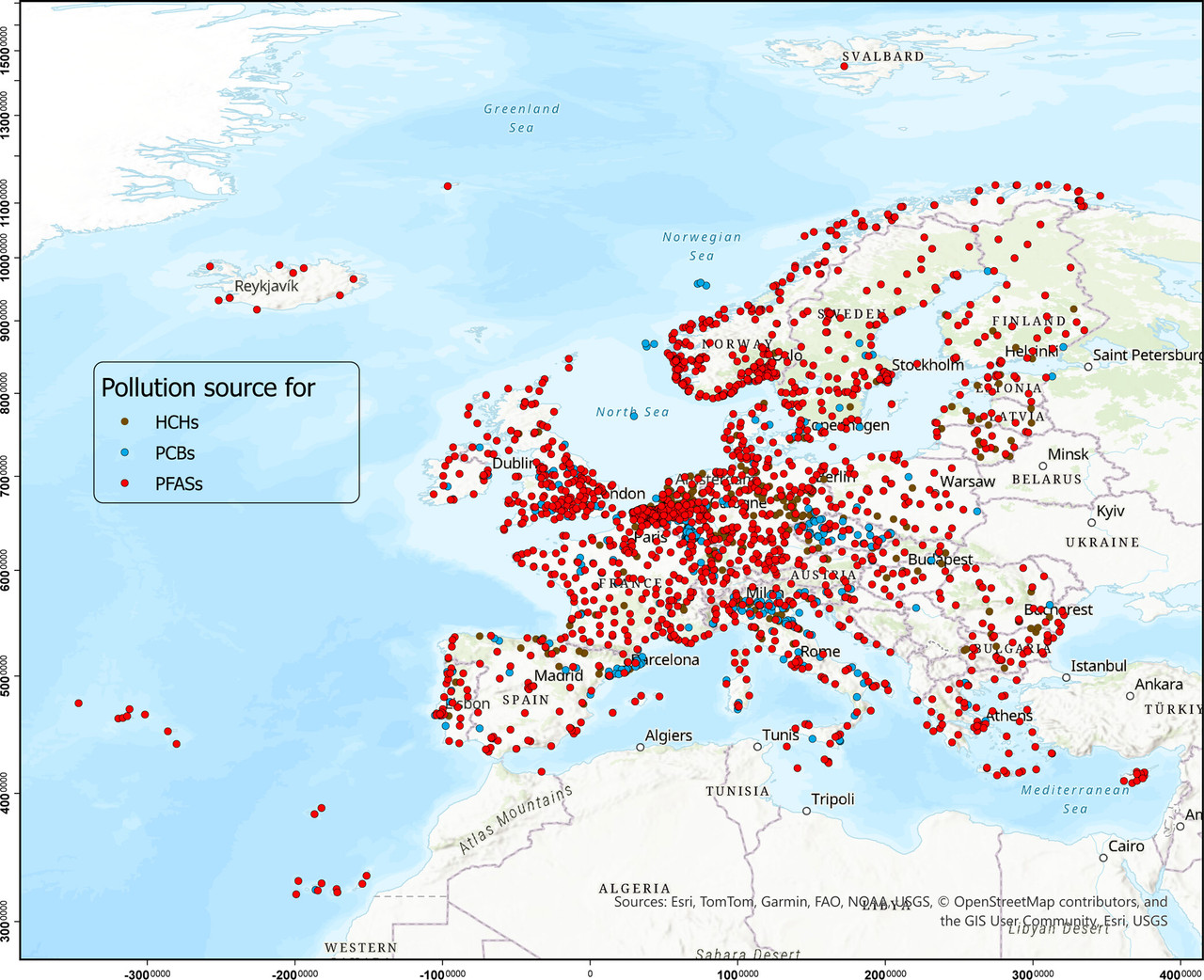
Figure 3. Spatial distribution of the sites with soil pollution-causing activities for PCBs, HCHs, and PFASs.
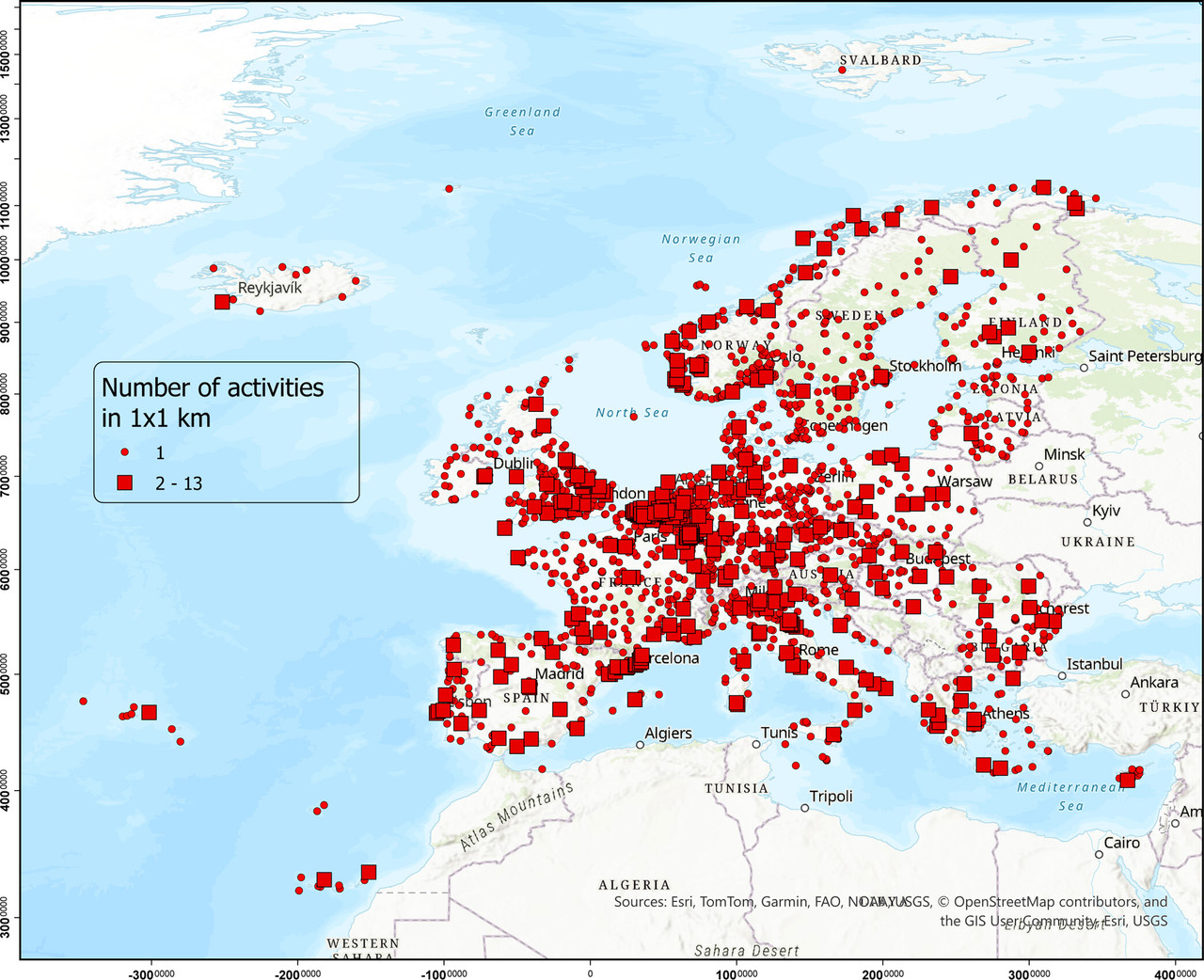
Figure 4. Recorded sites with pollution-causing activities across Europe mapped on a 1 km × 1 km grid. Red dots mark cells with a single activity; red squares mark cells with two or more (up to 13) activities in a 1 km2 area.
Disturbing, no?
Have a nice day tomorrow.
4 replies
 = new reply since forum marked as read
Highlight:
NoneDon't highlight anything
5 newestHighlight 5 most recent replies
= new reply since forum marked as read
Highlight:
NoneDon't highlight anything
5 newestHighlight 5 most recent replies
= new reply since forum marked as read
Highlight:
NoneDon't highlight anything
5 newestHighlight 5 most recent replies